Nigeria unable to meet Dangote Refinery's crude oil needs, says Finance Minister
Taiwo Oyedele reveals Nigeria's crude oil production falls short of Dangote Refinery's demand.



Nigeria's Finance Minister and Coordinating Minister of the Economy, Taiwo Oyedele, has confirmed that the country is currently unable to supply the Dangote Petroleum Refinery with its required daily volume of crude oil, which stands at 700,000 barrels. This announcement highlights ongoing concerns regarding Nigeria's crude oil production capabilities, which have not yet reached levels sufficient to meet both the refinery's needs and the nation's other domestic and export commitments.
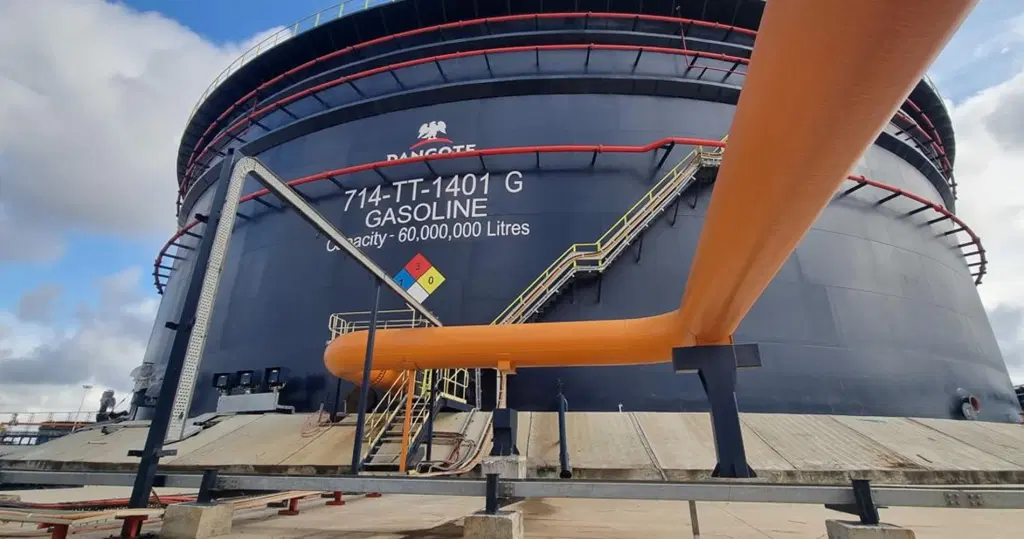
During an appearance on Channels Television's Politics Today, Oyedele stated, "We (Nigeria) are still not at the point where we can give Dangote Refinery 700,000 barrels of crude oil; we don’t have enough to service Dangote Refinery." This statement comes as the Dangote Refinery, recognized as Africa's largest single-train refinery, has a nameplate capacity of 650,000 barrels per day.
The implications of this shortfall are significant, especially as the refinery is expected to play a crucial role in reducing Nigeria's dependence on imported petroleum products. The inability to meet the refinery's crude oil demand raises questions about the country's overall production capacity and the effectiveness of its oil sector policies.
In a related development, the Federal Government has announced a 30-day petrol discount at filling stations operated by the Nigerian National Petroleum Company Limited (NNPCL). This initiative aims to provide temporary relief to motorists and consumers facing the burden of rising fuel prices. However, the timing and sustainability of this discount have drawn skepticism from opposition figures, who argue that a short-term price reduction may not adequately address the deeper issues plaguing the downstream petroleum sector.
As Nigeria navigates its oil production challenges, the government faces mounting pressure to ensure that domestic demands are met while also fulfilling international commitments. The situation underscores the need for strategic planning and investment in the oil sector to enhance production capacity and stabilize fuel prices for consumers.
Sources
- DailyPost Original article