Ghana's President rejects US health compact over 'humiliating' conditions
President John Mahama explains Ghana's decision to reject a US health agreement, citing concerns over data sharing and funding.


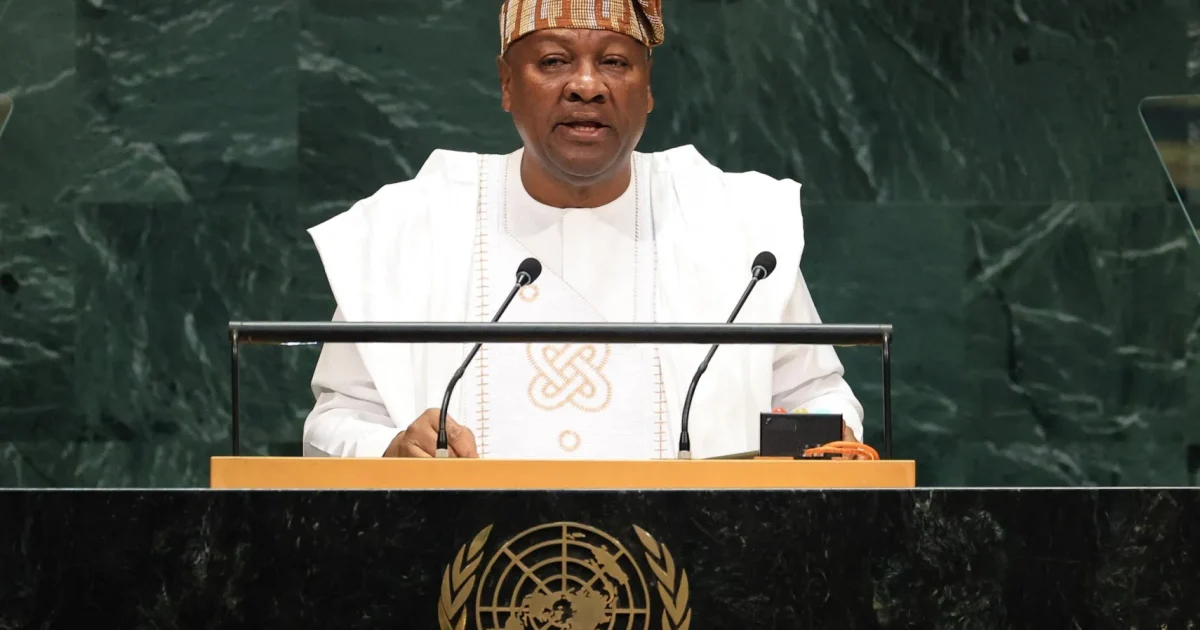
Ghana's President, John Mahama, has publicly explained the country's decision to reject a proposed health compact with the United States, labeling the conditions as "humiliating." This revelation came during a discussion at the Council on Foreign Relations in New York on September 25, where Mahama elaborated on the reasons behind the rejection of the agreement intended to replace previous health funding from the United States Agency for International Development.
The proposed compact was set to provide approximately $109 million in health assistance over five years. However, Mahama indicated that the terms included demands for Ghana to share sensitive health data, such as its pathogen profile and medical records, which he deemed unacceptable. "It states that we shall give the United States our pathogen profile. It also says we should give our medical records. I mean, who takes another country’s medical records?" he questioned.
Mahama highlighted that the compact required Ghana to commit a specific amount of counterpart funding and stipulated that medicines and medical products supplied under the program would not be subject to inspection by Ghana's Food and Drugs Authority. He noted that these provisions raised significant concerns within the Ghanaian government, prompting a swift rejection of the agreement by the Cabinet. "It was the compact that was thrown out in record time in our Cabinet. I’ve never seen anything thrown out as fast as that. And so, of course, we rejected it," Mahama stated.
Following the Cabinet's decision, the Health Minister was tasked with informing the US Ambassador of Ghana's stance, asserting that the country would manage without the proposed arrangement. "We said ‘no, we don’t want it’ and we’re doing fine," Mahama added, emphasizing the nation's ability to maintain its health systems independently.
The rejection of the health compact is also linked to the Accra Reset, an initiative aimed at reducing Africa's reliance on external health financing and enhancing local capabilities in producing medicines and vaccines. Mahama acknowledged that the withdrawal of $174 million previously programmed into Ghana's national budget has created significant funding gaps, particularly in the education and health sectors, which face an annual shortfall of $74 million in the health sector alone.
This recent development underscores the pressing need for African nations to build more resilient and self-sufficient health systems, as highlighted by Mahama's remarks on the importance of local capacity in managing health resources effectively. The Ghanaian government's firm stance against the US health compact reflects a broader trend among African countries seeking to assert their autonomy in health matters and reduce dependency on foreign aid.
Sources
- Punch Newspapers Original article