Deadly crossings: How declining footbridge use turns highways into killing fields
The decline in footbridge usage in Nigeria is turning highways into deadly zones for pedestrians. Authorities are calling for urgent measures to improve safety and accessibility.


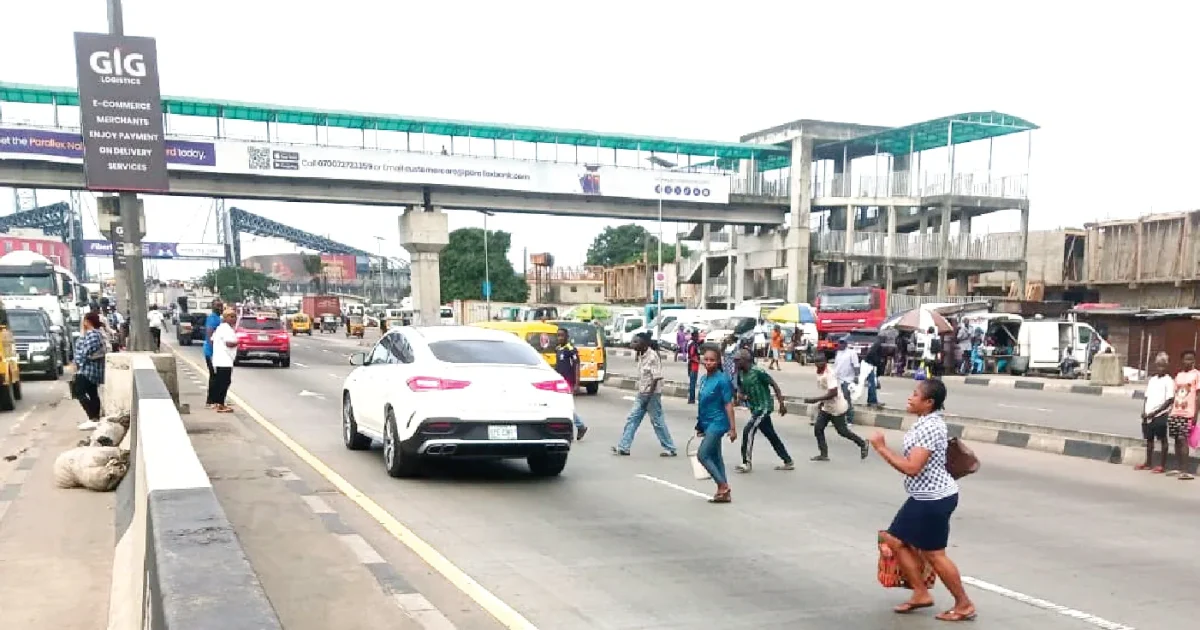
An elderly pedestrian, Rashidat Ademola, admitted that she avoids using the footbridge whenever she is in a hurry, arguing that climbing the bridges is particularly difficult for elderly people.
However, traffic officials insisted that no excuse justifies crossing the expressway illegally.
LASTMA warns against fatal impatience
On May 4, 2025, the Lagos State Traffic Management Authority warned pedestrians against crossing expressways after a lorry crushed a pedestrian along the Ojota Expressway.
The agency urged strict compliance with the use of pedestrian bridges, stating that the fatal collision occurred when the lorry, travelling along the Ojota main carriageway, encountered the pedestrian, who had breached crossing regulations.
The warning, signed by the Director of the Public Affairs and Enlightenment Department of LASTMA, Adebayo Taofiq, stated that the driver lost control of the vehicle while trying to avoid the pedestrian.
According to the statement, the General Manager of LASTMA, Olalekan Bakare-Oki, extended condolences to the family of the deceased, describing the incident as tragic and entirely preventable.
He emphasised the grave dangers of crossing high-speed expressways outside designated points, describing the practice as both perilous and irresponsible.
“It is both reckless and unlawful to ignore the infrastructural provisions made for pedestrian safety. The state government has invested significantly in pedestrian bridges, and it is incumbent upon all road users to utilise them conscientiously,” he said.
He further warned that disregard for traffic safety protocols endangers not only the individual but also the wider public, and called for collective vigilance and compliance to prevent further needless tragedies.
Anybody caught is prosecuted — KAI
When contacted, the Public Relations Officer of the Lagos State Kick Against Indiscipline, Lukman Ajayi, said the agency’s operatives were still actively enforcing compliance.
He said between three and four casualties are recorded daily from people crossing expressways, noting that despite the associated danger, many pedestrians continue to ignore the safer option.
“We are still carrying out operations to ensure that pedestrians do not cross expressways because we are helping them preserve their lives and those of other road users.
“If you cross the expressway and escape, you are free for that day. But if you are caught, you will be prosecuted. We are not the ones who prosecute people; it is the court that does that,” he told our correspondent.
Asked why KAI officials were absent from the locations visited during the investigation, Ajayi said, “Our operations are continuous. However, we close by 5 p.m., so that could be the reason you did not see us.”
“We have warned people to stop crossing the expressway, but they refuse. If they are killed, who will be blamed? Governor Sanwo-Olu does not cross the expressway, so why should they?” he added.
We still carry out spontaneous patrols on bridges — Neighbourhood Corps
Responding to findings that personnel were no longer visibly stationed on pedestrian bridges, the Public Relations Officer of the Lagos State Neighbourhood Safety Corps, Toba, said operatives still conduct regular patrols of bridges and other vulnerable locations across the state.
He said, “We carry out spontaneous patrols, not only on the bridges but also in communities with high crime rates. We have arrested people involved in criminal activities.
“From 7 o’clock, you will see our personnel patrolling the streets and monitoring activities across the state. In Oshodi, as in other locations, we work hand in hand with KAI and other security agencies to ensure pedestrians are safe and use the bridges.
“We do not carry guns, so we work with other security agencies to ensure everyone’s safety. Some of these people carry dangerous weapons, including screwdrivers, which they use to attack people when confronted.
“We have patrol vehicles for our operations, so we are still working, but we are no longer stationed permanently in one location. By the time you visited, our personnel might have moved from the bridge to another area that required their attention. We also use bicycles for patrols.”
- Punch Newspapers Original article