Moghalu urges Ndigbo to transform ideas into tangible development initiatives
At the Igbo Day celebration, Prof. Kingsley Moghalu calls for actionable strategies for the Igbo Charter.


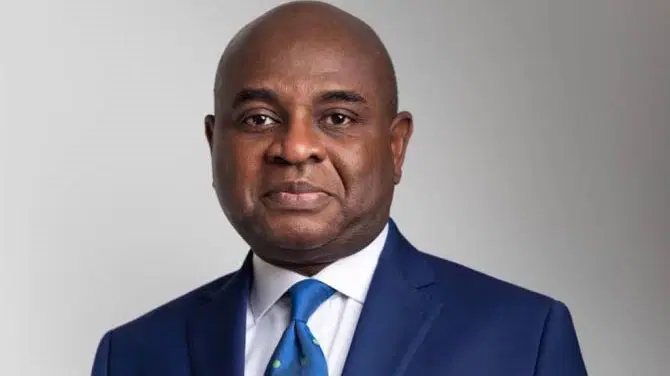
In a powerful address during the Igbo Day celebration in Umuahia, Prof. Kingsley Moghalu, former Deputy Governor of the Central Bank of Nigeria, urged the Igbo community to shift from merely producing reports to implementing actionable strategies that can drive economic, cultural, and political power. Moghalu, who chaired the committee responsible for the Igbo Charter of Strategic Engagement for National Development, emphasized the urgent need for the community to take ownership of the Charter and ensure its effective execution.
Moghalu expressed concern that the Igbo Charter could become another document that gathers dust unless immediate steps are taken to create structures for its implementation. He lamented that Nigeria is filled with excellent reports that fail to translate into real-world outcomes, stating, "Nigeria is a cemetery of excellent reports. Igbo land has contributed more than its own share of the tombstones."
To facilitate the Charter's success, Moghalu identified four key areas that could serve as a launchpad within the next 12 to 18 months: promoting the Igbo language, establishing a digital marketplace, creating a global diaspora register, and developing a robust security and investment framework. He called on the five Houses of Assembly in the South-East to mandate Igbo language instruction in schools and urged Igbo communities abroad to implement structured Igbo lessons in their educational institutions.
Furthermore, Moghalu proposed the creation of an Igbo digital marketplace and a certified apprenticeship system, highlighting the importance of leveraging technology to organize the region's vast trading and entrepreneurial ecosystem. He stressed the necessity of a comprehensive registration system for the Igbo diaspora, arguing that effective mobilization requires knowledge of the community's numbers and skills.
Addressing the issue of insecurity, which he deemed a major barrier to economic development, Moghalu advocated for the establishment of neighborhood watch systems and early-warning networks. He warned that without a credible security and investment mechanism, the region's growth would be severely hindered.
In his remarks, Moghalu cautioned against political parties appropriating the Charter, asserting that its survival hinges on maintaining its independence from partisan politics. He described the Charter as a social contract among the Igbo people and between them and Nigeria, rather than a mere political manifesto. He emphasized the need for political leaders to support the Charter from a leadership perspective, rather than through party interests.
Moghalu also called for broader national restructuring, advocating for devolution of powers and equitable political arrangements. He argued that these changes are essential not just for the Igbo but for all Nigerians, insisting that every nationality deserves security, citizenship, and a federal structure that prevents any group from becoming a "spectator in its own country."
In a call for internal meritocracy, he urged the Igbo to prioritize integrity, competence, and service over popularity and influence, asserting that their historical strengths in education and enterprise could lead to collective development if properly organized.
Moghalu concluded by highlighting the importance of moving beyond a victim mentality, encouraging the Igbo to harness their history while focusing on future agency and investment in their homeland. He proposed that Ohanaeze Ndigbo establish a professional implementation council to oversee the Charter's execution, ensuring that every priority is tracked with clear targets and accountability.
The lecture, attended by prominent Igbo figures including Senator John Azuta-Mbata and Senator Enyinnaya Abaribe, was hosted by Governor Alex Otti, marking a significant moment for the Igbo community as they seek to transform their aspirations into reality.
Sources
- Vanguard News Original article