Federal Government aims for over 80% electricity access in five years
Nigeria's Minister of Power outlines ambitious plans to enhance electricity access and reliability.


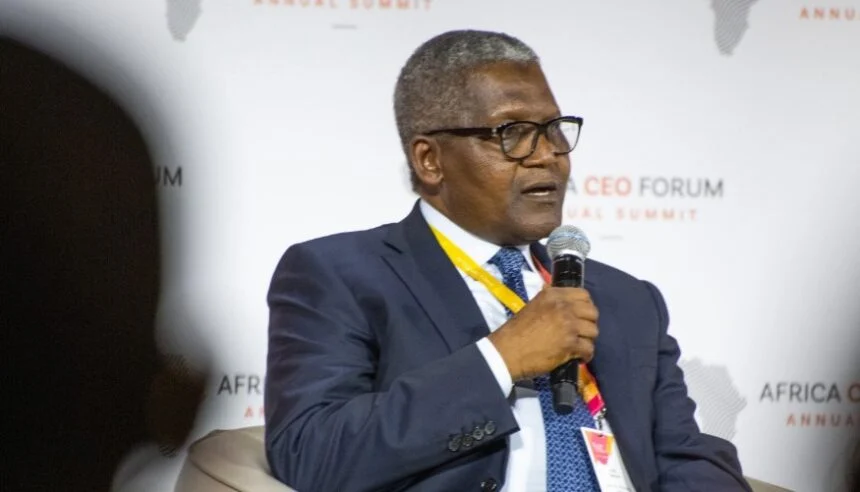
The Federal Government of Nigeria has set an ambitious target to increase electricity access to over 80% within the next five years. This initiative aims to address the ongoing energy crisis that has been significantly affecting the country's manufacturing sector. Minister of Power, Joseph Tegbe, made this announcement during a presentation at the recent Nigeria Economic Summit Group event held in Lagos.
In his address, Tegbe emphasized the government's commitment to not only enhance electricity access but also to close the gap between installed power generation and actual availability within a three-year timeframe. He highlighted the importance of this initiative in supporting the nation's industrial growth and competitiveness.
The minister outlined a comprehensive plan that includes strengthening key transmission corridors across the country, specifically targeting Lagos, Enugu-Port Harcourt, and Abuja-Kaduna-Kano. This infrastructure improvement is expected to bolster the reliability of power supply for both businesses and households. Tegbe stated, "Over 80 per cent access, ATC&C losses below 17 per cent, the capacity gap closed – Nigerian industry gets the reliable, affordable power it needs to compete for AfCFTA’s 1.4 billion consumers."
Additionally, the government aims to align with the Nigerian Electricity Regulatory Commission's goal of reducing Aggregate Technical, Commercial, and Collection (ATC&C) losses to below 16.92% within three years. This reduction is crucial as it directly impacts the efficiency and sustainability of the electricity sector.
The Minister also noted that the administration has initiated the rollout of seven million meters and the training of 5,000 personnel to support these efforts. He reiterated that electricity is central to President Bola Tinubu's vision of transforming Nigeria into a $1 trillion economy, underscoring the critical role of reliable power in achieving this economic goal.
Currently, Nigeria has an installed grid capacity of 13,625 megawatts, but only 4,854 megawatts are available on average daily. This disparity means that about 62% of the installed capacity is not utilized, while the realistic peak demand stands at approximately 20,000 megawatts. The inadequate electricity supply has forced many businesses to rely on self-generation, which significantly raises operational costs.
In 2023, Nigerians reportedly spent N16.5 trillion on self-generated electricity, contrasting sharply with the N1 trillion earned from grid revenue. The World Bank has estimated that unreliable electricity leads to an annual economic loss of $25 billion, which is equivalent to 5-7% of Nigeria's Gross Domestic Product (GDP).
Dr. Oluwasegun Osidipe, Director of Research and Economic Policy Division at the Manufacturers Association of Nigeria, stressed that inadequate energy supply remains the primary constraint for manufacturers, as highlighted in the Q2 2026 Manufacturers’ CEO Confidence Index. He pointed out that manufacturers are compelled to invest heavily in alternative energy sources due to the unreliability of grid power, which further diminishes their competitiveness.
Osidipe also raised concerns about regulatory challenges, noting that manufacturers face multiple agencies with overlapping requirements and additional costs. He called for a more coordinated approach between monetary and fiscal policies to support the manufacturing sector effectively.
The government's commitment to enhancing electricity access and reliability is seen as a crucial step towards unlocking Nigeria's industrial potential and fostering economic growth in the coming years.
Sources
- Punch Newspapers Original article