

…development in the fight against crude oil theft and efforts to increase Nigeria’s crude oil production. He said: “This discovery here is a product of long-time synergy between the base and other security agencies within the island and outside. It has been a product of actionable intelligence over time. “This is their…
…on imported petroleum products.The Syrian experience also demonstrates that crude oil production alone does not guarantee energy security.Countries need functioning refineries, reliable crude supply, storage infrastructure, efficient distribution networks and policies that can cushion consumers from severe internationa…
…bpd recorded in July. The increase, though modest, marked another month of improved oil production as the country sustained compliance with its Organisation of Petroleum Exporting Countries crude oil quota. The Nigerian Upstream Petroleum Regulatory Commission disclosed this in a statement issued on Sunday by its Head,…

…only about two months’ supply of petrol, which it needs to import despite its domestic oil production because of limited refining capacity. The deteriorating economic conditions are also placing severe pressure on Iranian households. Average monthly salaries are estimated at about $125, compared with basic household sp…

…per cent. On oil sector growth, NBS noted that the nation recorded an average daily oil production of 1.72 million barrels per day (mbpd) in Q2’26, higher than the daily average production of 1.68 mbpd recorded in the same quarter of 2025 by 0.05 mbpd and higher than Q1’26 production volume of 1.55mbpd by 0.17 mbpd. “T…
…said the resulting improvement in peace and stability had also supported increased crude oil production. The NUPRC boss, however, acknowledged that the implementation of some trusts had been affected by disputes, particularly disagreements over the constitution of their boards of trustees. She said the commission had b…

…and more effective monetary policy transmission. It added that gradually higher oil production was expected to support economic growth in 2026 and 2027. “The change in outlook to positive from stable reflects improvements in Nigeria’s external position and stronger-than-expected economic growth, which, if sustained, wo…
…recalled that Nigeria spent about $10 billion on fuel subsidies in 2022, at a time when oil production was declining and government revenues were under pressure. He cited warnings by the World Bank that the subsidy was consuming resources that could have been deployed to critical sectors, including education, healthcar…

…Refinery. Seven additional commercial transactions are also reportedly in the pipeline.Oil production hits five-year highThe group also praised NNPC for reducing operating costs by $3.4 billion through contract restructuring and optimisation, alongside a six per cent rise in crude oil production and an 8.1 per cent inc…
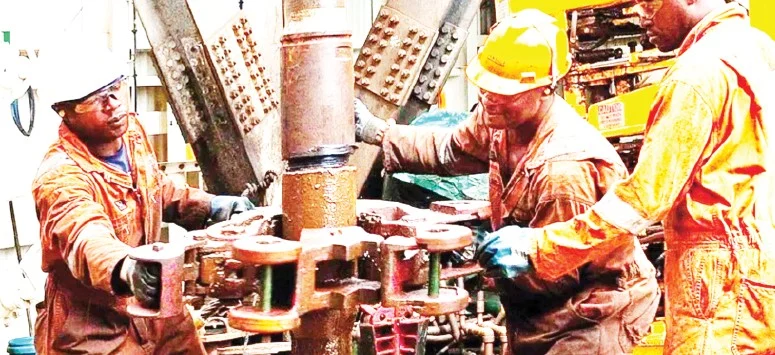
…supporting higher production, DARE OLAWIN writes Nigeria is witnessing a rise in oil production, driven by several factors, including a sustained reduction in pipeline losses and improved security of oil assets. The Nigerian Upstream Petroleum Regulatory Commission’s July report showed that oil losses through pipelines…

…that Nigeria’s economy would grow by 4.2 per cent in H2 2026, supported by higher crude oil production and stronger performance in dominant sectors. It expects inflation to moderate further and the naira to remain broadly stable, although both could face pressure from supply shocks, pre-election spending, global oil pr…

…to commercially viable operations while substantially increasing Nigeria’s crude oil production. He noted that the three government-owned refineries should achieve a combined reliable throughput of at least 325,000 barrels per day, which is capable of meeting domestic demand and enabling Nigeria to export refined petro…
…the oil sector is expected to sustain its growth, supported by improved domestic crude oil production, reflecting better security conditions and the gradual implementation of upstream reforms. The group said increased domestic refining activity would also strengthen industrial output, reduce dependence on imported refi…

…to Amadasu, with deep offshore fields accounting for about 24 per cent of the country’s oil production and 19 per cent of gas output. He said the new framework would create greater opportunities for investment and support the next generation of deep offshore projects. The NUPRC executive commissioner explained that nin…

…The figure comprises `$2.378m allegedly owed as gas flare debt and $646,605.55 in oil production-related debt. However, the representative of Dubri Oil, Soyode Clement, faulted the query, saying it arose from a reconciliation issue between the company and the NUPRC when the report was compiled. He told the committee th…
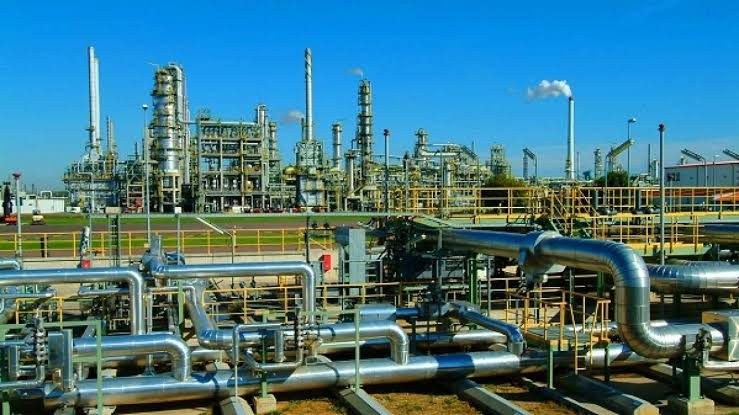
…Petroleum Regulatory Authority (NMDPRA) says Nigeria plans to allocate all of its crude oil production to the domestic market by 2030 as local refining capacity expands.According to a report by S&P Global, Nigeria produced 1.74 million barrels of crude oil per day in June and plans to increase production to 3 million b…

…It cited falling inflation, a turnaround in the balance of payments, increased crude oil production, the emergence of Nigeria as a net exporter of petroleum products and the more than doubling of tax collections as evidence of the recovery. The report also highlighted an increase in the minimum wage, saying it had doub…

…at more than 215 trillion cubic feet, yet gas flaring remains a persistent feature of oil production. According to NOSDRA’s 2025 Gas Flare Report, operators flared about 323 billion standard cubic feet (SCF) of gas during the year. The agency estimated that the wasted gas was worth about $1.1 billion (₦1.49 trillion),…

…by the Nigerian Upstream Petroleum Regulatory Commission (NUPRC) that Nigeria’s crude oil production reached 1.735 million barrels per day in June 2026, representing 104 per cent of Nigeria’s OPEC production quota and the highest crude oil output recorded since April 2020,” Folorunsho said. He disclosed that since Apri…
…of their assets to support the Federal Government’s target of increasing crude oil production to two million barrels per day by 2027. The Commission Chief Executive, Mrs. Oritsemeyiwa Eyesan, gave the charge on Friday in Abuja during the signing ceremony for the second batch of winners of the 2022/2023 Mini Bid Round a…

…stability, moderating inflation, stronger external reserves, improved crude oil production and resilient financial markets have significantly reduced macroeconomic vulnerabilities and strengthened investor confidence. He noted that government revenues also improved on the back of higher oil receipts and stronger non-oi…
…said. For Nigeria, the elevated crude prices come as the country records its strongest oil production performance in more than six years, raising expectations of higher export earnings, stronger foreign exchange inflows and improved government revenues if current price levels are sustained. Data released by the Nigeria…

…positive growth for a 4th consecutive month. “In the month under review, crude oil production hit 1.56mbpd while 0.18mbpd of condensates was produced. This means Nigeria met 104% of the 1.5mbpd crude oil production quota set by the Organisation and Petroleum Exporting Countries (OPEC). “In strict crude oil terms (exclu…

…capacity. Data show that while Africa contributes about seven per cent of global crude oil production, refining capacity across the continent declined by roughly one-third over the past two decades as ageing refineries suffered years of underinvestment, operational inefficiencies and poor maintenance. The commissioning…

…past five years. According to the report, the Dangote refinery expansion includes a base oil production unit, but the facility has yet to commence operations, leaving the region dependent on imports. "Lower availability of base oils and rising global prices due to the continued disruption associated with the US-Iran wa…