Nigeria's cocoa sector loses $2 billion annually due to processing underutilization
The Federal Government highlights the need for improved cocoa processing to boost revenue.


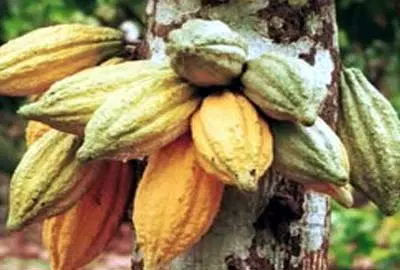
Nigeria is losing approximately $2 billion each year due to the underutilization of its cocoa processing capacity, according to the Federal Government. The Minister of Agriculture and Food Security, Abubakar Kyari, made this announcement during the Africa Cocoa and Coffee Conference in Lagos, emphasizing the urgent need for investment in cocoa processing.
Currently, Nigeria has an installed cocoa processing capacity of about 2,000 tonnes annually, yet only 30 percent of this capacity is being utilized. Kyari, represented by Ajayi Olutobaba, Deputy Director of Tree Crops at the Federal Ministry of Agriculture and Food Security (FMAFS), stated that the government aims to transition from merely producing cocoa to processing it into various products such as butter, liquor, powder, and chocolate. He remarked, "Roughly $2 billion in value addition slips away every year. It is not a shortage of resources; it is an opportunity waiting for the right investors."
The conference, organized by the Cocoa and Coffee Farmers Alliance Association of Africa (COCEFAAA) in partnership with the FMAFS and the Cocoa Research Institute of Nigeria (CRIN), brought together stakeholders to discuss the challenges and opportunities within the cocoa and coffee sectors. Kyari pointed out that while Africa produces about 70 percent of the world's cocoa, it only captures a small fraction of the $130 billion chocolate industry. He called for improved collaboration among African nations to enhance their bargaining power in international markets.
Dr. Abiodun Adedeji, acting Executive Director of CRIN, highlighted that Nigeria's cocoa productivity remains stagnant at between 250kg and 300kg per hectare despite government efforts to distribute improved seedlings. He urged for better pricing for farmers and greater local processing to create a sustainable value chain. Adedeji noted that between 2011 and 2015, the government distributed 601,000 pods to farmers, but productivity has not significantly improved since then.
The International Institute of Tropical Agriculture (IITA) also emphasized the need for climate-resilient cocoa varieties to enhance productivity and protect farmers from climate change impacts. Senior researcher Ranjana Bhattacharjee pointed out that cocoa output in the region has declined by 10 percent due to climate-related challenges, including extreme temperatures and erratic rainfall. She advocated for the adoption of alternative cocoa varieties that can withstand changing weather conditions.
The conference underscored the importance of moving from exporting raw cocoa to local processing and branding. Stakeholders, including representatives from various state governments, stressed the need for a comprehensive approach that encompasses improved planting materials, agronomic practices, and post-harvest management.
As the cocoa and coffee sectors face numerous challenges, including climate change and market volatility, the call for a shift towards value addition and local processing has never been more critical. The discussions at the conference aim to pave the way for a more sustainable and profitable cocoa industry in Nigeria and across Africa.
Sources
- Vanguard News Original article