US seeks to revoke citizenship of two Nigerians among 40 accused of serious crimes
The US government has initiated denaturalization proceedings against two Nigerians and 38 others for serious offenses.


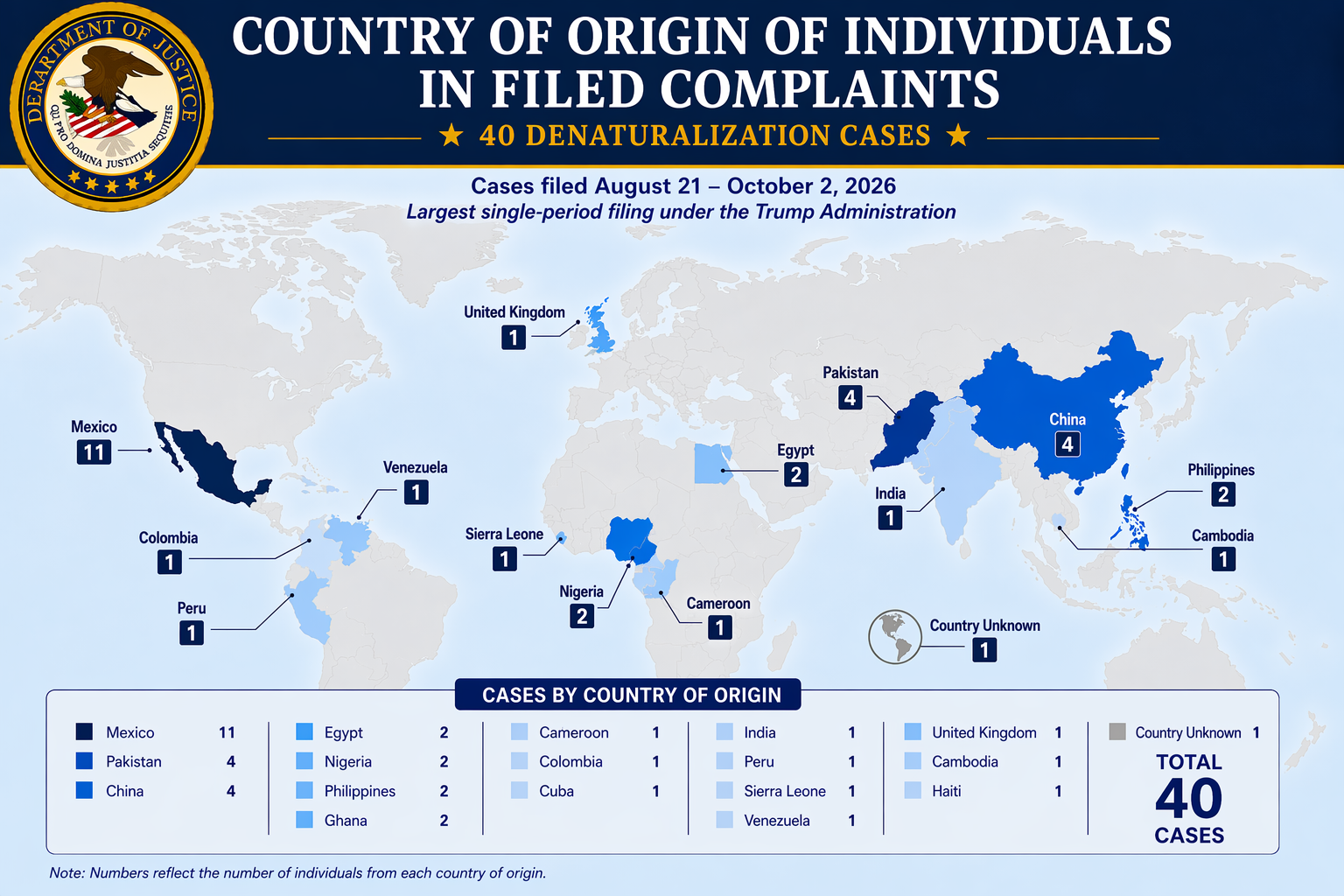
The United States government has taken significant steps to revoke the citizenship of two Nigerian nationals, along with 38 other individuals, as part of a broader initiative to enforce immigration laws. This announcement was made by the United States Department of Justice on October 5, 2026, highlighting a crackdown on individuals accused of serious criminal activities.
The denaturalization actions, filed in multiple U.S. district courts, are the largest of their kind under the Trump administration, with complaints submitted between August 21 and October 2, 2026. The individuals targeted are accused of serious offenses, including acting as agents for foreign governments, committing voluntary manslaughter, and engaging in aggravated sodomy against vulnerable individuals.
Attorney General Todd Blanche emphasized the significance of this operation, stating, "Today's announcement marks the largest denaturalization effort in modern history." He noted that the individuals involved had concealed critical information from the U.S. government, which raises concerns about national security and public safety.
Among the Nigerians facing denaturalization is Douglas Chukwuka Eze, who has been accused of immigration fraud during his naturalization process. In 2023, Eze was convicted of two counts of False Swearing in Immigration Matters. The Justice Department claims he stole a birth certificate belonging to another individual and used that identity to gain immigration benefits. The complaint filed in the District of Maryland alleges that Eze misrepresented his identity and criminal history, leading to the call for the revocation of his citizenship.
The second Nigerian, Beatrice Chioma Nwaoha Ashamole, aged 54, is also facing serious allegations. The Justice Department's complaint indicates that Ashamole failed to disclose crucial information during her naturalization proceedings, including previous aliases, arrests, and prior immigration applications. The department is pursuing her denaturalization on the grounds that she illegally procured her citizenship through fraud and false testimony.
This move by the U.S. government reflects a stringent approach to immigration enforcement, with officials asserting that they will not tolerate deception in the naturalization process. Assistant Attorney General Brett A. Shumate remarked, "Every single one of these individuals lied their way into U.S. citizenship," reinforcing the administration's commitment to restoring integrity in the citizenship process.
As the U.S. continues to address issues of immigration fraud, these cases serve as a reminder of the serious consequences that can arise from misrepresentation during the naturalization process. The outcomes of these denaturalization proceedings could set a precedent for future immigration enforcement actions.
Sources
- Linda Ikeji's Blog Original article