Richard Akinnola critiques Nigeria's judiciary, compares it to military era
Activist Richard Akinnola highlights concerns over judicial independence in Nigeria.


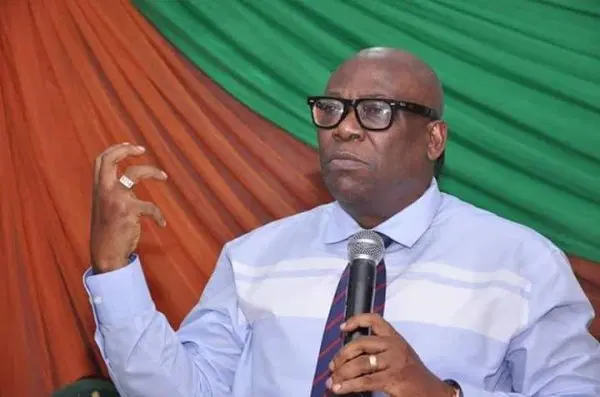
In a recent address, prominent journalist and activist Richard Akinnola voiced serious concerns regarding the current state of Nigeria's judiciary, suggesting it was more independent during the military regime than it is in the present democratic setting. His remarks came during an event organized by the Health of Mother Health Foundation (HOMEF) in Benin City, where he participated in a book reading aimed at promoting environmental protection and human rights.
Akinnola pointed out that while there are many diligent and independent judges in the system, a handful of politically compromised judges have tarnished the public's perception of the judiciary. He noted that this has led to a significant loss of confidence among Nigerians regarding judicial fairness and integrity.
He elaborated on the troubling trend of certain judges being repeatedly assigned sensitive cases, raising questions about the impartiality of the judiciary. "When there is a perception that a public officer seems to have control over the judiciary, and cases are assigned in a particular judicial division in Abuja to a certain number of judges, it engenders suspicion," he stated. He cited the example of one judge being assigned multiple major cases by the Department of State Services (DSS), calling it a questionable practice that undermines trust in judicial outcomes.
Akinnola lamented that the current judiciary has become synonymous with political influence, stating, "Justice is rooted in public confidence. And when you have an institution in which the public has that kind of impression that certain judicial decisions are politically motivated, it brings the whole institution to ridicule." Despite acknowledging the presence of capable and independent-minded judges, he emphasized that the few who are politically compromised overshadow their integrity.
He urged the judiciary to take proactive steps to reinvent itself, emphasizing the need for independence and fearlessness to restore public confidence. "The judiciary must assert its independence and instill public confidence," Akinnola asserted.
The event also featured Nnimmo Bassey, Executive Director of HOMEF, who echoed Akinnola's sentiments about the importance of knowledge sharing for environmental protection and human rights. Bassey addressed misconceptions about reading habits in Africa, advocating for greater engagement in educational initiatives.
Akinnola's comments reflect a growing concern among citizens regarding the judicial system's ability to uphold justice impartially in Nigeria, highlighting the urgent need for reforms to enhance its credibility and independence.
Sources
- Vanguard News Original article