Supreme Court ruling on Electoral Act raises concerns for PDP and opposition candidates
The Supreme Court's recent ruling has significant implications for the PDP and other opposition parties ahead of the 2027 elections.


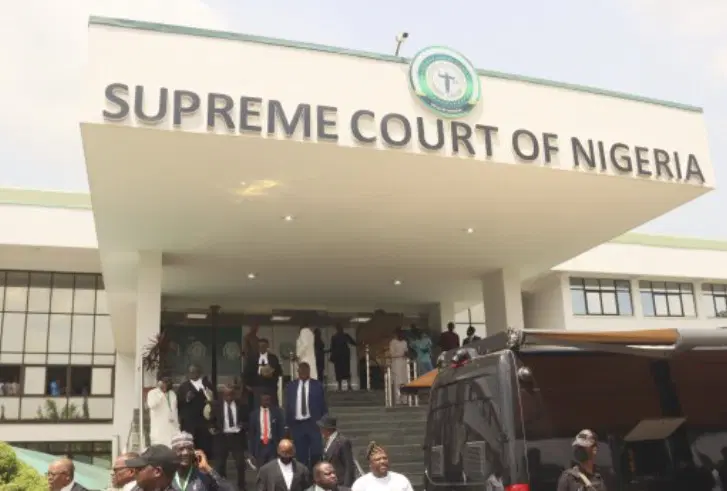
The recent ruling by the Supreme Court has reignited legal challenges for the Peoples Democratic Party (PDP) and other opposition candidates as they prepare for the 2027 elections. On September 24, the apex court restored crucial provisions of the Electoral Act 2026, which had been previously voided by a Court of Appeal decision. This ruling is expected to impact the nominations of candidates from the PDP, Social Democratic Party (SDP), Allied Peoples Movement (APM), People’s Redemption Party (PRP), and even a candidate from the All Progressives Congress (APC).
The Supreme Court's unanimous decision reinstated Sections 77(5), 77(6), 77(7), and 84(2) of the Electoral Act, affirming their compatibility with the 1999 Constitution. The restoration of these provisions means that political parties must adhere to the membership register submitted to the Independent National Electoral Commission (INEC) at least 21 days before a primary election. This requirement raises the stakes for candidates, as any discrepancies in their registration or nomination processes could lead to legal challenges.
Among those facing scrutiny are several PDP candidates, including Senator Saliu Mustapha, Kolo Jiya, Professor Iyabo Obasanjo, and Senator Olubiyi Fadeyi. While the Supreme Court did not make specific findings against these candidates, their eligibility is now under question due to the restored provisions. For instance, Mustapha and Jiya, who transitioned from the APC to the PDP, must prove their names were on the PDP membership register during the required timeframe. The Kwara PDP has defended their candidacies, asserting that both politicians obtained the necessary waivers to participate in the party's nomination process.
In Gombe State, the situation is even more complicated for former Minister of Communications, Professor Isa Ali Pantami. A Federal High Court had already nullified the PDP governorship primary that produced Pantami, ordering the party to conduct a new primary in compliance with electoral laws. The PDP has scheduled this fresh primary for September 29, allowing Pantami and other cleared candidates a chance to secure their nominations.
Dr. Iyabo Obasanjo's candidacy has also come under the spotlight following her recent switch from the APC back to the PDP. Questions have arisen regarding whether her name was included in the PDP register submitted to INEC before her nomination. Despite these concerns, her media aide has stated that the Supreme Court ruling does not disqualify her from contesting in the Ogun Central senatorial election.
Senator Olubiyi Fadeyi has similarly rejected claims that the Supreme Court ruling disqualified him from returning to the Senate, emphasizing that no court has issued such an order. He defended the legitimacy of his nomination process, asserting that the PDP complied with all relevant electoral laws.
As the implications of the Supreme Court's ruling unfold, the focus will likely shift to the documentation and processes behind each candidate's nomination. Political analysts suggest that unless clear evidence of non-compliance is established, the ruling itself does not automatically invalidate the nominations of PDP candidates. The legal landscape remains uncertain, with potential challenges looming for various candidates across opposition parties as they navigate the electoral process ahead of the upcoming elections.
Sources
- Vanguard News Original article