National Television Ceases Broadcast Amid Heavy Gunfire in Niger's Capital
A night of intense gunfire in Niamey has left Niger's national television off air, raising security concerns.


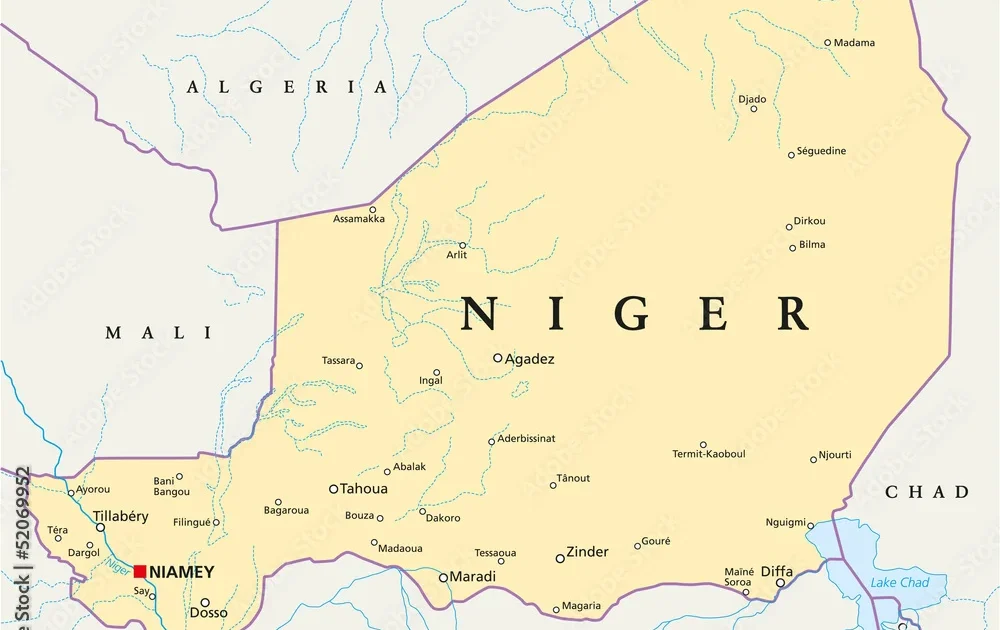
Niger's capital, Niamey, was rocked by heavy gunfire late Saturday night, leading to the national television station, Tele Sahel, going off air. The violence erupted around a military base near the city's airport, which has faced attacks from jihadist groups earlier this year. The military junta, which has been in power for three years, is grappling with persistent jihadist threats that have plagued the country for nearly a decade.
The origins of the gunfire remain unclear, but the military urged citizens to remain calm and avoid spreading unverified information. In a statement on social media, they reassured the public of their commitment to national defense, saying, "Our defence and security forces have been mobilised for the defence of the homeland."
Witnesses reported hearing heavy gunfire and explosions at Base 101, a military installation in Niamey. The first shots were recorded around 1:00 am local time, continuing until dawn. Local residents described the sounds of bursts of gunfire and explosions, with one individual noting that the intensity of the gunfire suggested it was not typical of jihadist attacks, which usually involve small arms fire.
By 9:00 am, Tele Sahel's programming was replaced with a black screen, and access to key government sites, including the presidential palace, was blocked by military personnel. Videos circulating on social media showed armored vehicles deployed in the area surrounding the airport, indicating heightened security measures.
This incident follows a troubling pattern of violence in Niger, where jihadist groups, particularly the Islamic State in the Sahel (EIS) and the Group for the Support of Islam and Muslims (JNIM), have targeted the region. Earlier this year, Niamey airport was attacked twice, with the military managing to repel both assaults. The January attack resulted in the deaths of 20 assailants and four soldiers, while the June attack claimed the lives of at least 11 soldiers and two civilians.
The ongoing conflict in the Sahel is marked by rivalries between jihadist factions, as they vie for control over territory and influence. Niger, along with Burkina Faso and Mali, has distanced itself from the Economic Community of West African States (ECOWAS) and has sought to strengthen ties with Russia, particularly in military cooperation.
As the situation in Niamey develops, residents are left anxious about their safety and the implications of this violence for the already fragile security landscape in the region. The military's response and the nature of the gunfire will likely be scrutinized as authorities work to restore order and ensure the safety of the citizens.
Sources
- Punch Newspapers Original article