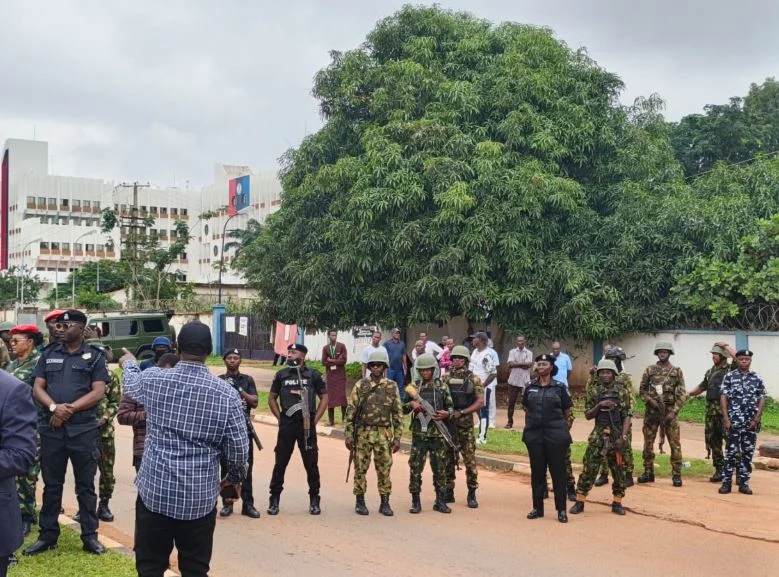
Defence Minister emphasizes proactive planning for election security measures
Gen. Christopher Musa urges security agencies to prioritize early preparation for elections.


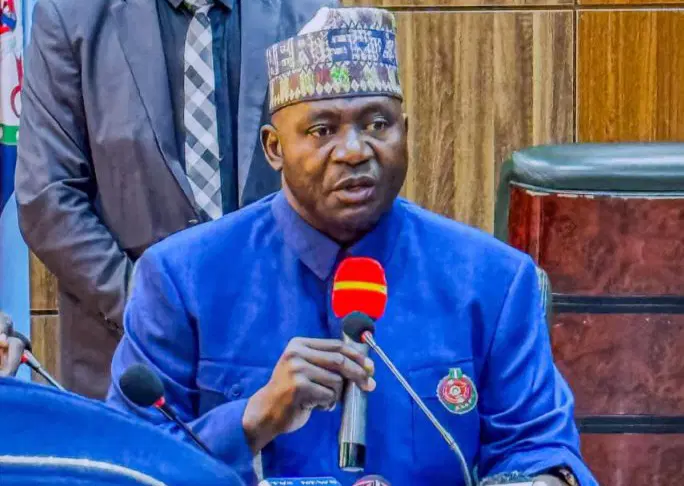
The Minister of Defence, General Christopher Musa (retd.), has issued a strong warning to security agencies regarding the dangers of relying on last-minute deployments for election security. Speaking at a seminar organized by Blueprint newspaper, Musa emphasized that effective election security requires extensive planning and coordination well ahead of election day.
Musa articulated that securing elections is not merely an event that occurs on the day of voting but rather a continuous process that necessitates months of intelligence-led preparation. He stated, "The lesson is clear: successful election security is not achieved through last-minute deployments. It is achieved through months of planning, intelligence-led operations, inter-agency coordination, effective communication and continuous assessment of emerging threats."
Highlighting the evolving nature of security threats, the minister pointed out that election preparations must extend beyond just the physical protection of polling units. He noted that threats could arise from various sources, including cyberspace, misinformation, and the manipulation of social divisions. Musa warned that the most significant risks to election integrity may come not from armed individuals at polling stations but from anonymous online actors who manipulate information to erode public trust.
To bolster election security, Musa proposed a comprehensive six-pillar framework. The first pillar, he stated, is Strategic Intelligence, which should underpin all election security planning. He stressed that modern election security must be driven by intelligence rather than reactive measures, incorporating threat assessments and real-time information sharing among relevant agencies.
The second pillar focuses on protecting digital infrastructure, which is increasingly vital as elections become more technology-driven. Musa asserted that safeguarding electoral systems and communication networks against cyber threats is no longer optional but essential.
Civil-Military Coordination forms the third pillar, where Musa called for enhanced collaboration among security agencies, minimizing institutional rivalry. He emphasized the importance of respecting the constitutional roles of all agencies while promoting joint planning and interoperability.
Unified Strategic Communication is the fourth pillar, which Musa described as crucial for countering misinformation. He warned that in today’s information landscape, silence can allow misinformation to flourish, making timely and accurate communication vital for maintaining public confidence.
The fifth and sixth pillars, Responsible Information Environment and Engaged Citizens, highlight the collective responsibility in combating misinformation. Musa noted that the government cannot tackle misinformation alone; it requires the involvement of the media, technology companies, civil society, and citizens to foster a fact-based public discourse.
In a related discussion, former Zamfara State Governor AbdulAziz Yari cautioned politicians against exploiting insecurity for political gain. He stressed that addressing insecurity should be a shared national responsibility, urging political parties to refrain from using the issue as leverage to win public support. Yari, reflecting on his tenure during the tumultuous 2015 and 2019 elections, reiterated that insecurity has persisted as a significant challenge across various administrations.
As Nigeria approaches its next elections, the call for proactive and comprehensive security measures underscores the importance of preparation in ensuring a peaceful and credible electoral process.
Sources
- Punch Newspapers Original article