Disagreements Delay House Committee Report on Alleged Fake Government Agency
A House committee's investigation into a purported government agency faces delays due to internal disagreements and calls for further testimony.


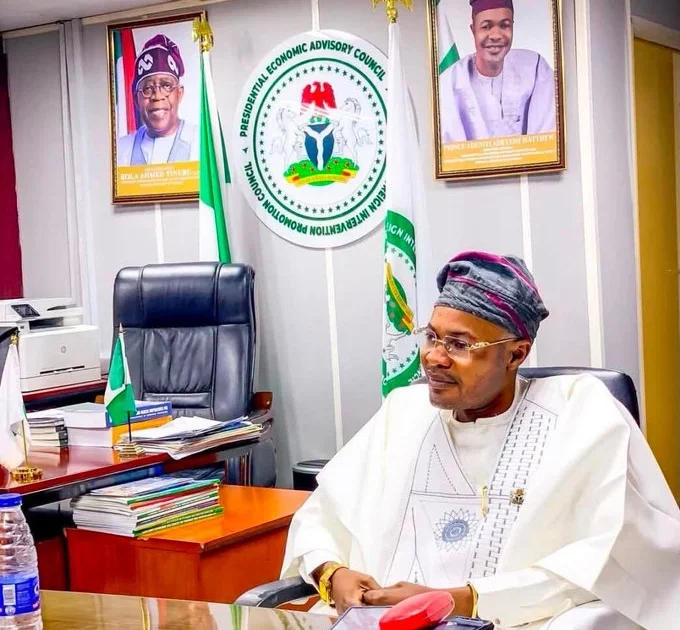
The investigation by a House committee into the alleged existence of a fake government agency has encountered significant delays, primarily due to disagreements among its members regarding the necessity of further testimonies. The inquiry centers around Adeniyi Adeyemi, who claimed to have been appointed as the Director-General of a non-existent agency and alleged that he paid N400 million to the Chief of Staff to President Bola Tinubu, Femi Gbajabiamila, through a proxy to secure his position.
Adeyemi's claims have sparked controversy, with him later clarifying that he never met Gbajabiamila in person. The Presidency and Gbajabiamila have categorically denied these allegations, labeling the agency as fictitious and accusing Adeyemi of forging documents to support his claims. In a related investigation, the Independent Corrupt Practices and Other Related Offences Commission (ICPC) cleared the Presidency of any wrongdoing and recommended that Adeyemi face prosecution.
The committee, led by Gagdi, had initially planned to hold a press conference after questioning relevant government institutions involved in the matter. However, no such briefing has occurred, and the committee's progress has been hampered by Adeyemi's insistence on testifying publicly, in front of journalists and his legal team. This insistence has created a rift within the 12-member committee, with some members advocating for Adeyemi to testify in public, while others believe that a formal invitation should be extended to Gbajabiamila to address the allegations made against him.
A source familiar with the proceedings indicated that the lack of a formal invitation for Gbajabiamila is a significant point of contention among committee members. Some feel that proceeding without hearing from him could lead to public criticism of the report's credibility. The source noted, "Some of the committee members feel there should have been a presentation from Gbajabiamila since Adeyemi is alleged to have mentioned his name in the saga. Writing a report without listening to him may attract criticism from the public."
In response to the investigation, Amnesty International has condemned the probe, highlighting it as a reflection of the weaknesses within Nigeria's governance institutions. Isa Sanusi, the Country Director of Amnesty International Nigeria, criticized the investigation as a mere performance lacking real accountability, stating, "The incident of the fake government agency is an indictment of the Nigerian government. It is a practical indication of the rampant corruption within and around government agencies."
Similarly, Transparency International Nigeria has expressed concerns that the Gagdi-led committee may conclude its investigation without adequately addressing critical questions raised by the scandal. Auwal Rafsanjani, the Executive Director of the organization, emphasized that the controversy extends beyond individual allegations, questioning how an entity with no lawful existence could infiltrate government layers, secure official recognition, and receive budget allocations exceeding N1.3 billion in the 2026 Appropriation Act.
Both organizations have called for a more independent inquiry into the matter, arguing that government officials should not investigate their colleagues. As the committee continues to grapple with these issues, the public remains eager for clarity on the allegations surrounding the purported agency and the broader implications for governance in Nigeria.
Sources
- Punch Newspapers Original article