Thousands protest private property legislation in Argentina
Thousands of Argentinians protested against new legislation that threatens private property rights. The controversial bill has ignited fears of arbitrary land seizures and sparked widespread public outcry.


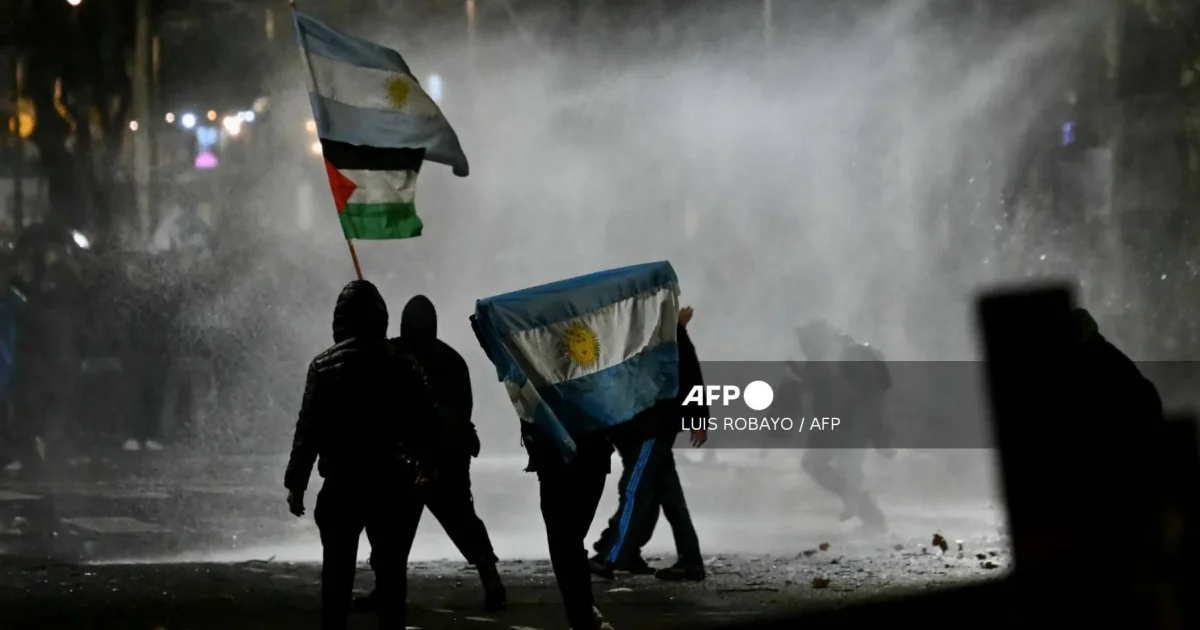
Protesters clashed with police as thousands of people braved stormy weather to demonstrate against a controversial private property bill outside the Argentine Senate on Thursday.
As the protest drew to a close, scuffles broke out on Congress Square with protesters targeting police with stones and other projectiles, and security forces responding with tear gas, rubber bullets and a water cannon.
The protesters, mobilised by left-wing movements and unions, were undeterred by earlier concessions removing one change that would have made it easier for foreigners or foreign entities to buy land in Argentina.
Demonstrators carried Argentine flags and banners reading “The homeland is not for sale,” an AFP correspondent observed.
The “Inviolability of Private Property” bill being debated in Congress aims to make changes to property ownership in Argentina, such as streamlining eviction procedures, changing rural land use rules and making it more difficult for the state to take ownership of private property.
The government of libertarian President Javier Milei aims to use the bill to provide a legal framework that attracts investment.
Opposition and environmental groups firmly oppose the bill, denouncing a risk of “colonisation, fragmentation, fracture and balkanization of the homeland.”
With only 20 seats in a 72-senator body, Milei’s party backed down and removed the chapter dealing with land purchases by foreigners, which would have raised the limit on land available for foreign purchase from 15 per cent to 25 per cent.
Nearly five per cent of Argentina’s territory — an area roughly equal in size to England — is under foreign ownership, according to a 2025 report from the University of Buenos Aires and other researchers.
But they note that in some districts the percentage of foreign owners already exceeds the 15 per cent limit, particularly in “territories endowed with water and mineral resources, or logistical advantages,” such as ports.
AFP
- Punch Newspapers Original article