
…about $253bn after the exchange rate adjustment to approximately $377bn, while the naira GDP increased from about ₦314tn in 2024 to around ₦530tn. Defending the administration’s borrowing, the presidential aide stated that Nigeria’s debt profile remained sustainable. “Nigeria’s debt-to-GDP ratio remains relatively…

…ICT, sector contributed 10.07 per cent to Nigeria’s real Gross Domestic Product, GDP, in 2025, up from 9.79 per cent in 2024, with telecommunications accounting for 7.29 percentage points of the contribution. Kupoluyi noted that Nigeria recorded 154.7 million active internet subscribers, 188 million mobile connections…

…Nigeria on course to raise industry’s GDP contribution to 25% by 2030 …Industrialisation is key to Nigeria’s $1tn economy, says Enoh By Juliet Umeh The federal government has said discussions are ongoing to revive moribund textile factories across the country and the Ajaokuta Steel Company as part of efforts to reposi…

…failed catastrophically. The National Bureau of Statistics may produce charts showing GDP growth and improved macroeconomic indicators, but these are abstractions that mean nothing to the farmer who cannot afford fertiliser, the teacher whose salary cannot cover rent, or the pensioner who dies waiting for gratuity. Eco…

…The lies!! Read this. “He said the numbers tell a story of recovery, stressing that real GDP grew by 11.2 per cent and there was nearly 10 per cent per capita income growth in USD terms last year.” (VANGUARD Report, July 17, 2026. Whoever said that must have more imagination than facts. To begin with, all GDP figures,…

…the African Continental Free Trade Area, manufacturing contributes barely 8 per cent of GDP, and capacity utilisation has slipped to 57.7 per cent,” the statement read. He argued that the timing could not be more consequential. “The government’s macroeconomic reforms have delivered stability — inflation roughly halved…
…the commission’s data, the NBS cannot effectively release Gross Domestic Product (GDP) figures. This recognition is difficult to achieve and directly addresses the credibility gap the commission is working to close. The presidential mandate of 2 million barrels per day by 2027 and 3 million by 2030 defines Nigeria’s up…
…of macroeconomic stabilisation amid rising poverty, asking, “the economy is growing, GDP is growing but the real people who live within that economy are struggling to earn their living. So you question that pattern of growth.” He rejected calls for a compromise with austerity, pointing to Europe and America as models w…
…“The government’s aspiration remains bold, achieving seven per cent annual real GDP growth and building a $1tn economy by 2030. This requires thinking differently, questioning assumptions, challenging long-held theories and developing a strategy that stretches us while remaining deeply grounded in economic reality,” he…
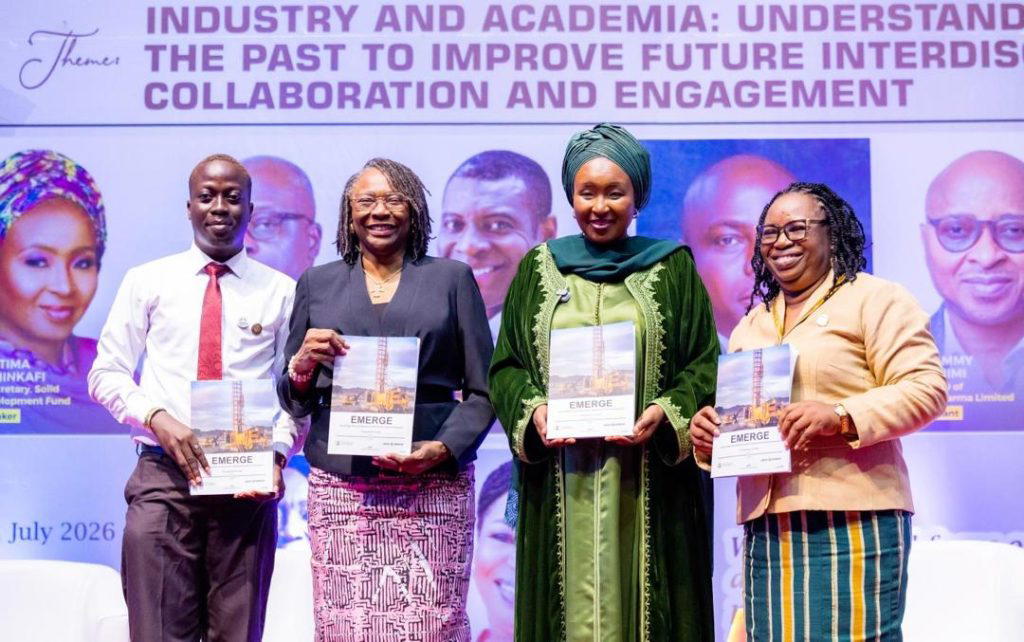
…triple Nigeria's solid minerals sector to three per cent of the Gross Domestic Product, GDP, by 2030, a target set by the Minister of Solid Minerals Development, Dr Dele Alake, under his Seven-Point Agenda for the sector. She emphasized the scale of Nigeria's mining opportunity, and its historical underperformance, des…

…released on Wednesday, June the IMF projected that Nigeria's gross domestic product (GDP) would grow by 4.1 per cent in 2026 and improve to 4.3 per cent in 2027, leaving both forecasts unchanged from its April outlook. The IMF also retained its growth projections for sub-Saharan Africa at 4.3 per cent in 2026 and 4.5 p…
…each member to meet a spending goal of 5 percent of its total gross domestic product (GDP). The alliance has agreed to meet a 3.5 percent mark by 2035. Only five out of NATO's 32 total member countries are projected to hit that goal by this year. Trump has also been critical of NATO member countries, particularly Spain…
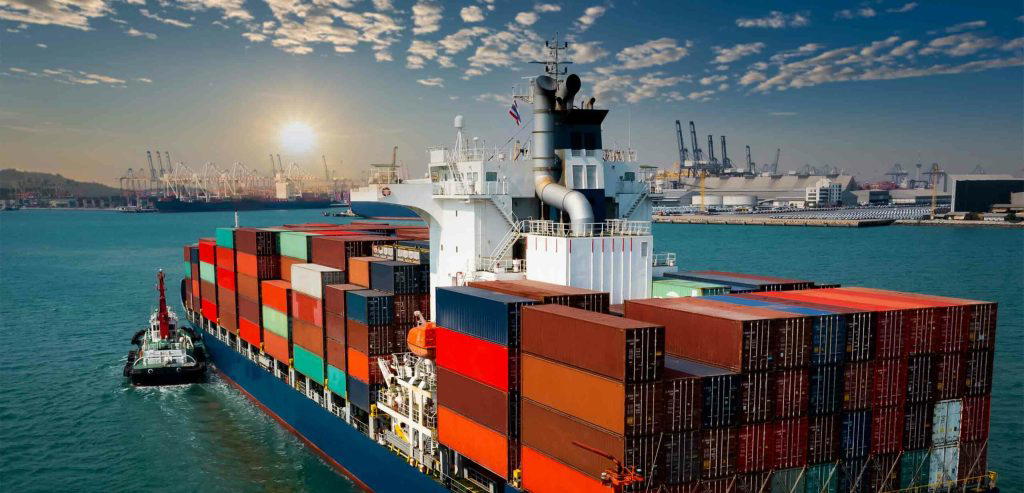
…he noted, reflects a major structural weakness that reduces the sector's contribution to GDP, hinders job creation, and increases production costs. He added that the over-reliance on imported inputs, compounded by factors such as exchange rate volatility, had driven costs off limits of sustainability and threatens Nige…
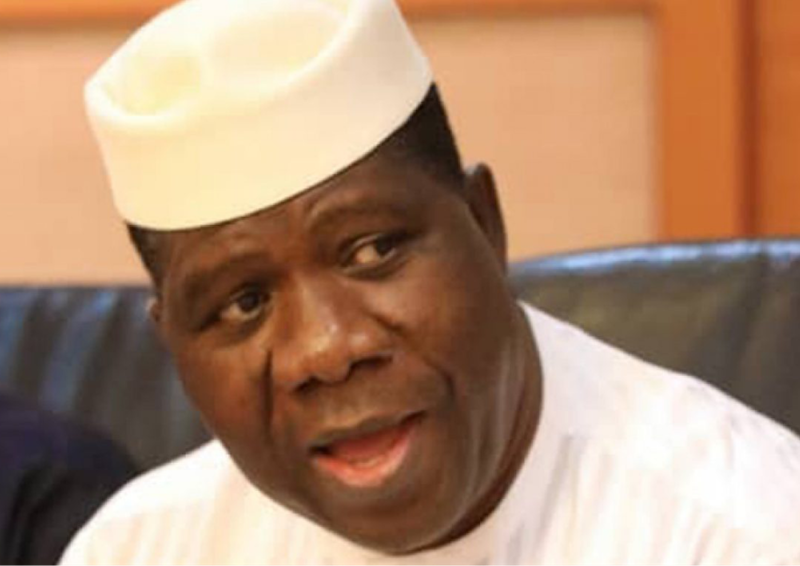
…This value, according to the study, is equivalent to a 2.5% contraction of our GDP. This does not include the economic cost of banditry, kidnapping and armed violence in the North-West as well as violent conflicts between farmers and herders in the Middle Belt, among others. The human cost is perhaps unquantifiable. It…
…comes after IMF disclosed that Nigeria left public spending equivalent to about 2% of GDP unreported in recent official budgets, obscuring the country's true financing needs and making the fiscal deficit appear smaller than it actually was. Speaking in Lagos, IMF Resident Representative in Nigeria, Christian Ebeke, sai…
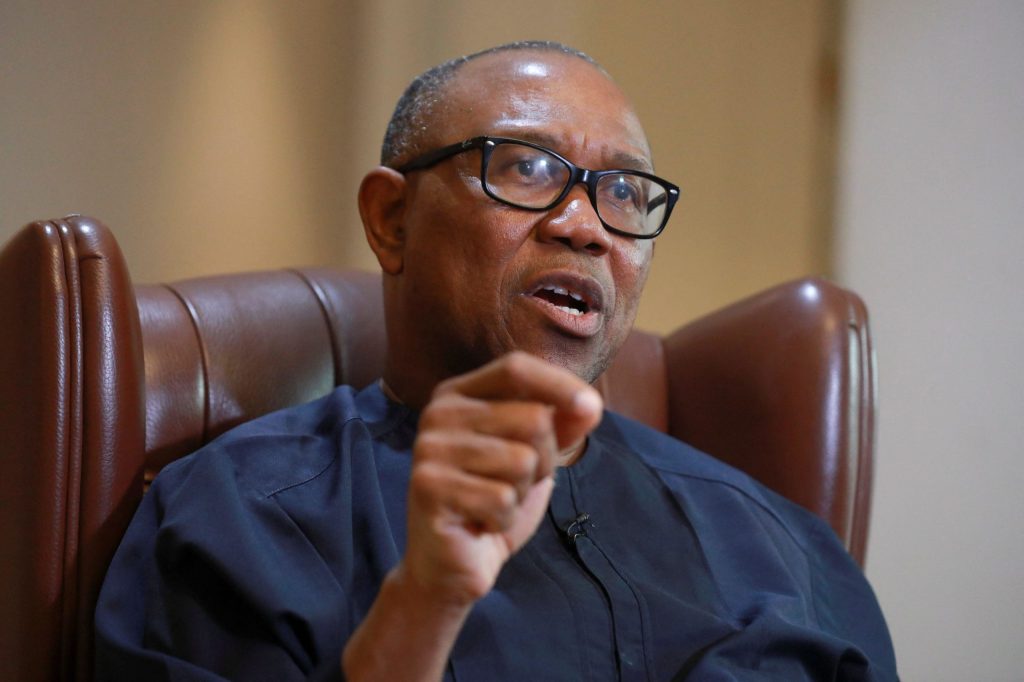
…that the amount represents about two per cent of Nigeria’s Gross Domestic Product (GDP) and over 35 per cent of the country’s ₦23.96 trillion capital expenditure budget for 2025. Obi also claimed that the sum exceeds the combined allocations to the education and health sectors in the 2025 budget, saying it could have b…
…followed an IMF disclosure that Nigeria left public spending equivalent to about 2% of GDP unreported in recent official budgets, obscuring the country's true financing needs and making the fiscal deficit appear smaller than it actually was. Speaking in Lagos, IMF Resident Representative in Nigeria, Christian Ebeke, sa…
…public expenditures equivalent to about 2 per cent of Nigeria’s Gross Domestic Product (GDP) were not captured in recent official budgets. According to him, the alleged omission translates to approximately ₦8.8 trillion, which he claimed was spent outside Nigeria’s statutory budgetary framework. The former presidential…

The IMF disclosure came amid controversy over the alleged PFIPC, following claims that the body operated within government circles despite the Presidency insisting that no such agency was created by President Bola Tinubu. The controversy has generated calls from opposition figures and civil society groups for a compreh…
…it has a low revenue problem,” Verghis said. He explained that Nigeria’s debt-to-GDP ratio is lower than that of many comparable countries, stressing that concerns should focus on improving government revenue rather than limiting borrowing. “When we looked at the numbers, Nigeria is a moderately indebted country, meani…
…from anywhere in the world for a single-entry visa on arrival ($50). Rwanda, with a GDP roughly one-thirtieth of Nigeria's, is being more generous to Nigerians than Nigeria has ever thought to be generous to Rwandans. This is not a technicality. It is a statement of values, and Nigeria's current stance says, loudly and…
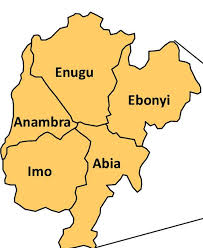
…that the zone contributes less than eight per cent of Nigeria's Gross Domestic Product (GDP), making it one of the country's least productive geographical regions. This reality carries consequences. Since economic output influences development indices and resource allocation, the South-East's weak domestic economy inev…

…that Nigeria's trade sector contributed 17.89% to the country's Gross Domestic Product (GDP) in the first quarter of 2026. Nigeria's economy recorded overall real GDP growth of 3.89% year-on-year in Q1 2026.
…and the undisputed engine of Nigeria's economy, contributing nearly 30% of the nation's GDP while driving commerce, finance, industry, and innovation across West Africa. It is also seen as the cultural and creative heartbeat of Nigeria. Its rapid urbanisation, vibrant entrepreneurial ecosystem, and strategic coastal lo…
…and innovation. He said Lagos already accounts for about one-third of Nigeria's GDP and remains one of Africa's largest metropolitan economies, with an estimated output of $257.59 billion on a purchasing power basis. According to him, the state attracts over 65 per cent of foreign direct investment into Nigeria and hos…