Tinubu challenges US agencies over drug trafficking records in ongoing court battle
President Bola Tinubu is embroiled in a legal dispute in the US concerning drug trafficking allegations and the release of related records.


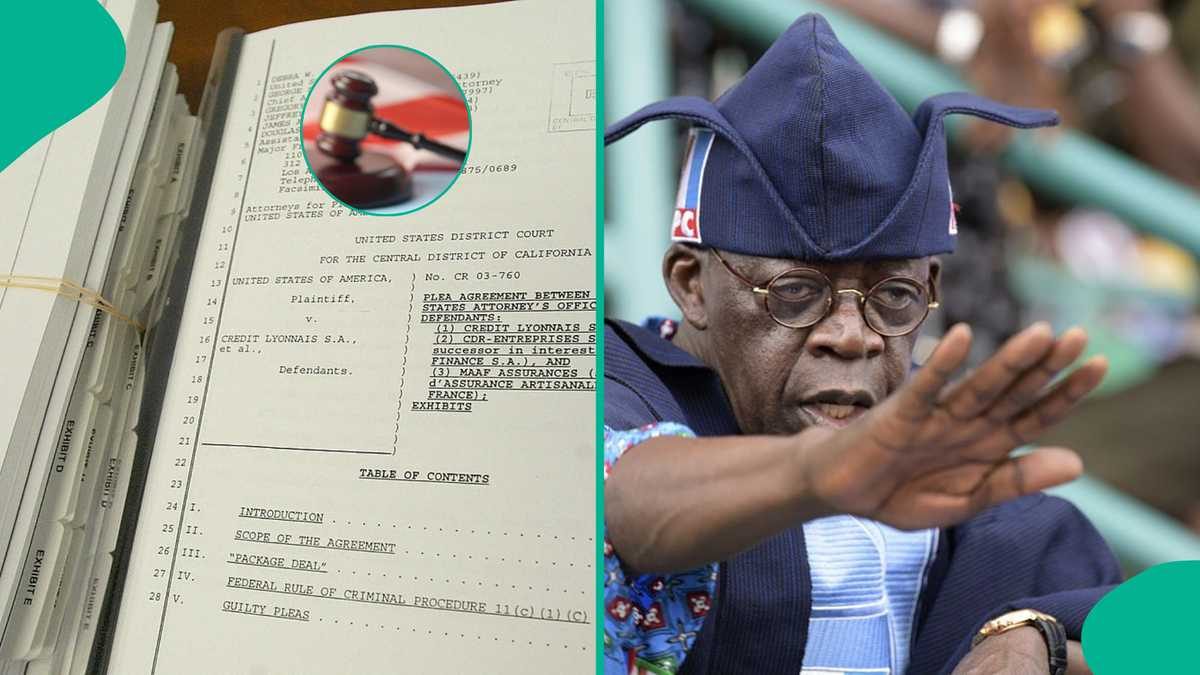
President Bola Tinubu is currently engaged in a significant legal battle in the United States, aiming to prevent the Department of Justice (DOJ), the Federal Bureau of Investigation (FBI), and the Drug Enforcement Administration (DEA) from disclosing records associated with drug trafficking allegations against him. This ongoing case has drawn considerable attention and has been developing over the past three years.
The legal proceedings began when Aaron Greenspan, an American transparency activist and founder of PlainSite, submitted multiple Freedom of Information Act (FOIA) requests to six federal agencies. These requests, filed between 2022 and 2023, sought documents related to investigations into a heroin ring that operated in Chicago during the early 1990s. Among those named in the requests was President Tinubu, alongside other individuals linked to the case.
Greenspan's initial inquiries were met with a Glomar response from five of the agencies, which means they neither confirmed nor denied the existence of the requested records. Dissatisfied with these responses, he escalated the issue to the DOJ's Office of Information Policy, which upheld the agencies' stance. Consequently, Greenspan filed a lawsuit on June 12, 2023, targeting several federal agencies, including the FBI, DEA, and the CIA.
In a notable ruling in April 2025, Judge Beryl Howell determined that the FBI and DEA had improperly issued Glomar responses and mandated that they disclose information related to Tinubu's investigations. The judge concluded that the agencies failed to demonstrate that Tinubu had a legitimate privacy interest in keeping the existence of the investigation confidential.
Central to the case is a civil forfeiture proceeding from 1993, where approximately $460,000 was linked to Tinubu. Greenspan's requests specifically include the complete FBI file on Tinubu and interview records from 1992 to 1993.
Tinubu's legal team, comprising attorneys Christopher W. Carmichael, Victor P. Henderson, and Oluwole O. Afolabi, filed documents arguing that the release of these records would infringe upon his right to privacy. They asserted that even if some information has surfaced in public records, Tinubu retains a privacy interest in undisclosed details, referencing US Supreme Court precedents.
Recently, on August 20, 2026, the FBI sought permission from the court to submit a sealed declaration to explain why it withheld certain records. The agency claimed that revealing its rationale publicly could expose law enforcement techniques and potentially endanger individuals' lives.
In a related development, Judge Howell granted a request for a short extension to comply with a court order but limited it to just four days, rejecting a 10-day extension sought by a Donald Trump-appointed attorney. This decision underscores the urgency of the case, which has been pending for over three years.
The legal proceedings have attracted attention from various quarters, including a Washington-based lobbying firm recently engaged by former Vice-President Atiku Abubakar, which has called for the immediate release of the court documents related to the case. As the situation unfolds, the implications of this legal battle for President Tinubu remain to be seen.
Sources
- Legit Original article