Atiku Abubakar challenges Tinubu's N600 billion cash transfer claims
The ADC presidential candidate questions the arithmetic behind the cash transfers, citing discrepancies.


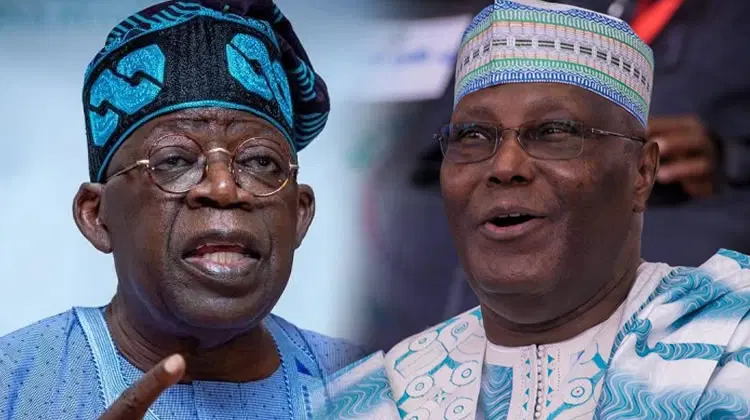
Atiku Abubakar, the presidential candidate for the African Democratic Congress (ADC), has raised serious concerns regarding the Bola Tinubu administration's claims about cash transfers to vulnerable households. In a statement released by his Senior Special Assistant on Public Communication, Phrank Shaibu, Atiku argued that the figures presented by the government do not add up, particularly in relation to the reported N600 billion disbursed.
Atiku highlighted that the government's payment structure indicates that qualifying households are supposed to receive N25,000 monthly for three months, which totals N75,000 per household. He pointed out that if 10 million households received the full payment, it would amount to approximately N750 billion, while 15 million households would exceed N1.1 trillion. However, the government claims to have spent just over N600 billion. He questioned the actual number of households that received the payments, stating, "How many received one tranche, two tranches or all three? How many payments failed or were reversed?" Atiku emphasized that merely having names on a social register does not equate to actual payments being made.
The former vice president also noted inconsistencies in the government's reported figures regarding the number of households reached by the cash transfer program. On July 16, 2026, the Presidency announced that 15 million households had benefited from the expanded cash transfers. However, this figure was contradicted by the Minister of Humanitarian Affairs, who stated on August 26, 2026, that only slightly over 10 million households had been reached. Atiku remarked, "So where did five million households go? These are not opposition figures. They are Tinubu's figures contradicting Tinubu's figures."
Atiku criticized the administration for what he described as a lack of accountability and transparency, stating that the government appears to be operating on a basis of convenience rather than factual accuracy. He argued that a government that claims millions of households are in need of emergency cash transfers should be focused on addressing the root causes of poverty rather than celebrating the number of vulnerable households.
He attributed the increase in poverty to high fuel prices, which raise transportation costs and subsequently increase the prices of food and medicine. Atiku proposed a more effective approach to tackling poverty, suggesting that reducing fuel and transportation costs at the source would alleviate economic pressures on families. He stated, "When petrol becomes cheaper, the bus driver spends less, the farmer moves produce more cheaply, the trader pays less for haulage, businesses face lower logistics costs and the savings travel through the economy to the family kitchen."
Atiku called for the government to provide a comprehensive payment trail for the claimed N600 billion disbursed, including details on unique verified households, payment tranches, state-by-state distribution, and any failed transactions. He insisted that Nigerians deserve clarity on the cash transfer program, questioning where the five million households that seem to have disappeared from the government's figures have gone. Atiku concluded that until the Tinubu administration reconciles its figures, the public will continue to seek answers regarding the discrepancies in the cash transfer program.
Sources
- Vanguard News Original article