
Ignorance, misinformation fuel rising sickle cell cases in Nigeria
The fate of a 26-year-old pregnant woman, Olamide Azeez (not her real name), and her unborn baby remains uncertain due to her ignorance of genotype compatibility before pregnancy. Compounding her si


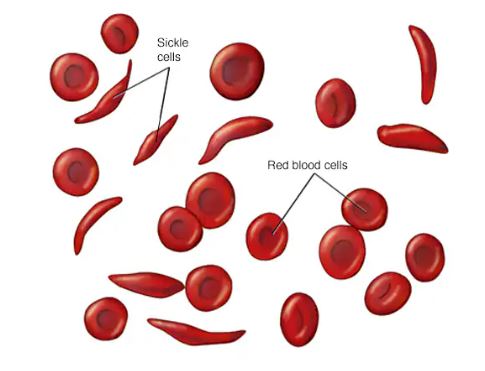
The fate of a 26-year-old pregnant woman, Olamide Azeez (not her real name), and her unborn baby remains uncertain due to her ignorance of genotype compatibility before pregnancy.
Compounding her situation, Azeez, because of financial constraints, is relying on herbal concoctions provided by a traditional birth attendant.
This has raised further concerns about her health and that of her unborn child.
There are hundreds of people like Azeez across the country whose lack of knowledge about genotype compatibility remains a major factor in the rising number of children born with sickle cell disorder.
An estimated 150,000 infants are born annually with sickle cell disorder, the most common inherited haemoglobin disorder worldwide.
According to the World Health Organisation (WHO), sickle cell disease is a serious inherited blood disorder caused by a mutation in the HBB gene.
The disorder results in abnormal, sickle-shaped red blood cells that can block blood flow and lead to severe complications.
The organisation said the disease also accounts for substantial mortality among children under five years, making it the 12th leading cause of death in that age group.
Another challenge linked to the weak healthcare system, which contributes to the persistence of sickle cell disease (SCD), is the prevalence of inaccurate genotype test results.
For Mr Martins Agu, a local trader, the discovery that two of his children have sickle cell disease almost led to the collapse of his marriage some years ago.
Agu recalls that before their wedding 18 years ago, a marriage counsellor at their church had advised him and his wife to undergo genotype testing.
According to him, the test results showed they were genetically compatible, with one partner having the AA genotype and the other having the AS genotype.
He said the problem began when it was discovered that the last two of their five children had the SS genotype.
"I thought my wife was having an affair because the situation did not add up.
"But a family member encouraged us to repeat the genotype test, and the new result showed that we were both AS, not AA and AS as we had been told before marriage," he narrates.
Agu's experience reflects that of many families across the country grappling with the challenge of caring for children living with sickle cell disease.
The situation can also be is linked to inaccurate genotype test results from some laboratories.
Dr Casimir Ifeanyi, President of the Association of Medical Laboratory Scientists of Nigeria (AMLSN), worries about the prevalence of substandard equipment and testing procedures in many laboratories across the country.
He said the persistent challenge was significantly contributing to frequent genotype testing errors nationwide.
According to him, such inaccuracies pose serious risks to patients who rely on laboratory results for critical health decisions.
He also reveals that only 10 per cent of more than 30,000 laboratories operating in Nigeria are regulated by the Medical Laboratory Science Council of Nigeria (MLSCN).
According to him, the situation leaves a huge regulatory gap within the country's healthcare system.
He warns that the lack of strict oversight will continue to expose Nigerians to medical errors, worsen health outcomes and contribute to preventable deaths.
A Consultant Haematologist, Dr Lucky Okpetu, stresses the importance of genotype testing before marriage.
He describes it as one of the most effective ways of reducing the burden of sickle cell disease in Nigeria.
Okpetu, Head of the Haematology and Blood Transfusion Department, Federal Medical Centre, Ebute Meta, says SCD occurs when a child inherits abnormal haemoglobin genes from both parents.
He says when two carriers (AS and AS) marry, there is a 25 per cent chance that each pregnancy can result in a child with sickle cell disease (SS).
"There is also a 50 per cent chance of having a child with the AS trait and a 25 per cent chance of having a child with the AA genotype.
"Genotype testing, commonly known as genotype screening, should be done before marriage so that intending couples can make informed decisions.
"Marriage is the coming together of two individuals who choose to live together.
"The presence of children is not what defines a marriage.
"Some couples may even decide not to have children," he notes.
Okpetu highlights that medical professionals do not explicitly forbid individuals with incompatible genotypes from getting married.
"You cannot stop two adults from getting married. What healthcare workers do is provide counselling.
"We explain the risks involved, the likelihood of having children with sickle cell disease and what living with the condition entails.
"If they decide to proceed, they must be prepared for the financial, physical, psychological and social challenges associated with raising a child living with the disease," he says.
On prenatal diagnosis, Okpetu describes it as a specialised medical procedure that can determine whether an unborn child has sickle cell disease.
The haematologist says that if prenatal testing confirms that a foetus has sickle cell disease, parents can discuss available options with healthcare professionals.
According to him, such discussions should be conducted in line with established medical and legal guidelines.
"Prenatal diagnosis can be performed during pregnancy, but it is a specialised and expensive procedure.
"It involves obtaining samples from the pregnancy for laboratory analysis, and there is a small risk of miscarriage associated with the process," he notes.
- Vanguard News Original article


